

Connected Health: Next-Generation Medical Networks
MIRACLE-5
Mixed-Reality Integrated Remote Assistance and Communication in 5G-Enabled Local Environments
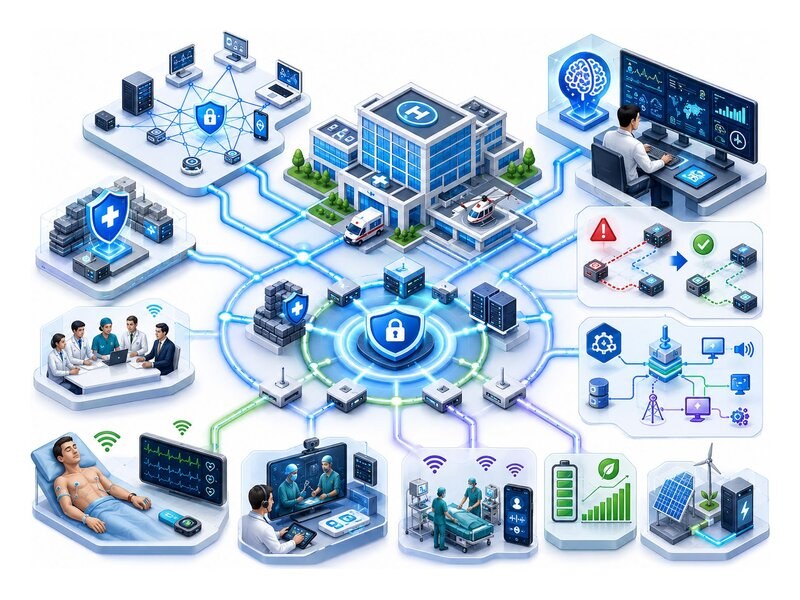
XR-based telemedicine via 5G campus networks – for geriatric assessments after hip fractures, ENT teleconsultations, ENT teaching and remote medical advice. In 2025 an open 5G core was installed, test networks were established, and the scenarios were evaluated with the ENT department of Leipzig University Hospital and compared with Wi-Fi.
- Duration
- until 06/2025 completed
MIRACLE-5 investigates how XR-based telemedicine can be integrated into clinical workflows in a technically robust and medically meaningful way via 5G campus networks. The focus is on scenarios in which remote medical specialists are involved in consultations, training, or medical queries: geriatric assessments following fractures near the hip joint, ENT teleconsultations, ENT teaching, and remote medical advice. The project considers not only AR functionalities, but also process integration, data provision, image and audio quality, and network parameters such as latency, jitter, bandwidth, and connection stability.
In 2025, practical mobile network integration was added as a key focus. SML (Smart Mobile Labs) was selected as the provider of the second 5G system. With the SML system, ICCAS was able to take greater control of the integration process itself and use an open 5G core. In terms of content, the focus shifted from an externally operated managed-service network to a more flexible and controllable test setup with dedicated campus networks. In 2025, the open 5G core was installed, and test networks were established and made operational.
Building on this, adaptations were made to XR glasses, 5G modems, QoS and slicing parameters, and measurement setups. The medical application scenarios were developed and evaluated in collaboration, among others, with Dr. Markus Pirlich from the Department of Otorhinolaryngology at Leipzig University Hospital. In addition, the use cases were refined based on clinical feedback and compared with Wi-Fi in order to realistically assess the suitability of 5G for real-time telemedical applications.
More projects of the team
-
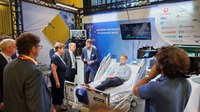 6G-Health Holistic development of high-performance 6G networking for distributed medical technology systems
High-performance 6G networking for distributed medical technology: in 2025 the infrastructure for tele-neuromonitoring, a testbed with three indoor localization technologies and a “patient room of the future” at the 6G Conference in Berlin were realized.
-
 KliNet5G Clinical networks via 5G
Secure, standards-based 5G campus networks (Open RAN) for hospitals – with measurement campaigns, SDC alarms in network management and assessment of reliability, IT security and economic viability; part of the BMWK-funded CampusOS framework.
-
QoE Development of a system for Quality of Experience in telemedical data exchange
Quality of experience in telemedical data exchange: video, vital signs and ECG data are prioritized in real time based on network quality and the clinical context – for example in ambulances.
-
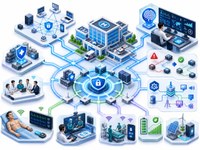 SUSTAINET-guarDian Sustainable Technologies for Advanced Resilient and Energy-Efficient Networks – guided utilities for automation, resilience, and digital innovation in advanced networks
Secure, resilient and energy-efficient networks for healthcare with AI-supported network monitoring and fault detection; ICCAS is responsible for the medical demonstrator.
Back to the team Connected Health: Next-Generation Medical Networks