

NFDI4DS
NFDI for Data Science
National research data infrastructure for data science and AI; ICCAS leads the biomedical use cases within the consortium.

NFDI4DataScience (NFDI4DS) develops a national research data infrastructure for Data Science and Artificial Intelligence in Germany. Its goal is to make research processes more transparent, reproducible, and fair by supporting the full data lifecycle: from collecting, processing, and analyzing data to publishing, archiving, and reusing results.
NFDI4DS connects key digital research objects such as datasets, code, models, metadata, and publications, and provides tools and services that make them easier to find, understand, link, and reuse. The project addresses the needs of the academic Data Science and AI community while also supporting other disciplines that rely on data-driven methods. NFDI4DS focuses on language technology, biomedical sciences, information sciences, and social sciences. ICCAS leads the biomedical use cases within the consortium.
More projects of the team
-
Medi.NET Intelligent Digital Platform for Location- and Time-Independent Medicine of the Future
Intelligent digital platform for location- and time-independent medicine: interoperable infrastructure based on IEEE 11073 SDC and HL7 FHIR, demonstrator and test environments, and a partner network of more than 80 actors; coordinated by ICCAS.
-
 CERTAINTY A Cellular Immunotherapy Virtual Twin for Personalized Cancer Treatment
Virtual twin for personalized cancer treatment, focusing on multiple myeloma and CAR-T cell therapy; ICCAS implements the virtual twin backend and frontend.
-
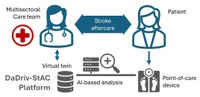 DaDriv-StAC Digital Platform for Data-Driven Decision Support in Post-Stroke Care
Digital platform for data-driven decision support in post-stroke care: a virtual medical twin compares the recommended care pathway with the actual course of treatment across sectors.